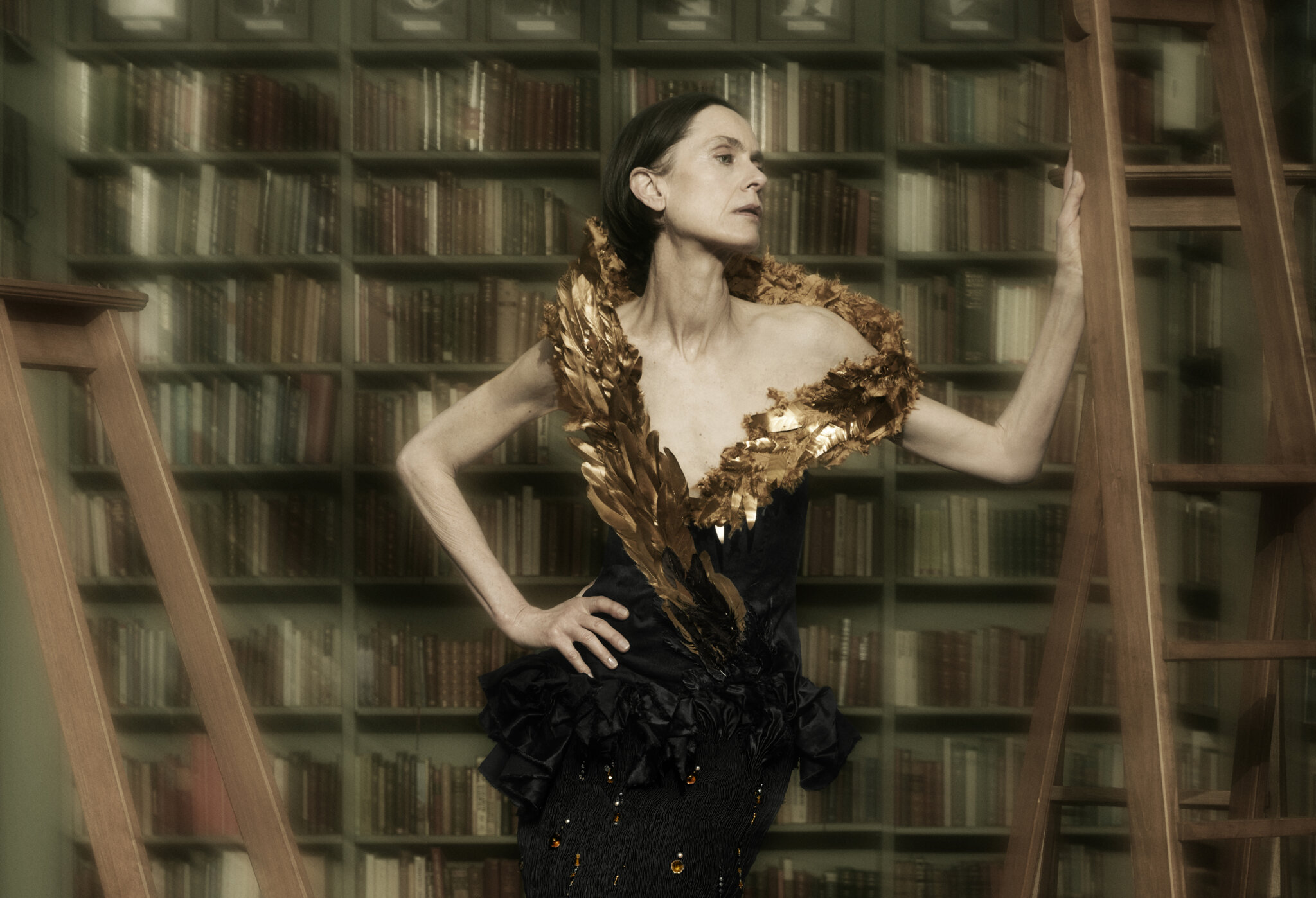
In the Nobel Creations project at Beckmans College of Design, first-year students on the Fashion programme create free interpretations of the Nobel Prizes in Physics, Chemistry, Physiology or Medicine, Literature and Peace, as well as the Sveriges Riksbank Prize in Economic Sciences in Memory of Alfred Nobel.
These creations explore what unites Nobel Prize laureates, artists and designers: creativity – the courage to think in new ways, to challenge established theories and to combine insights from different fields in innovative ways. They also offer a fresh take on gala attire, showing how special occasions, celebration and dignity can be expressed through fashion design.
In the Nobel Creations exhibition, art, science, literature and peace meet in an exploratory dialogue. This year’s Nobel Prizes touch on widely diverse subjects, such as quantum mechanics, the immune system and work for democracy.
Physics: Confined State
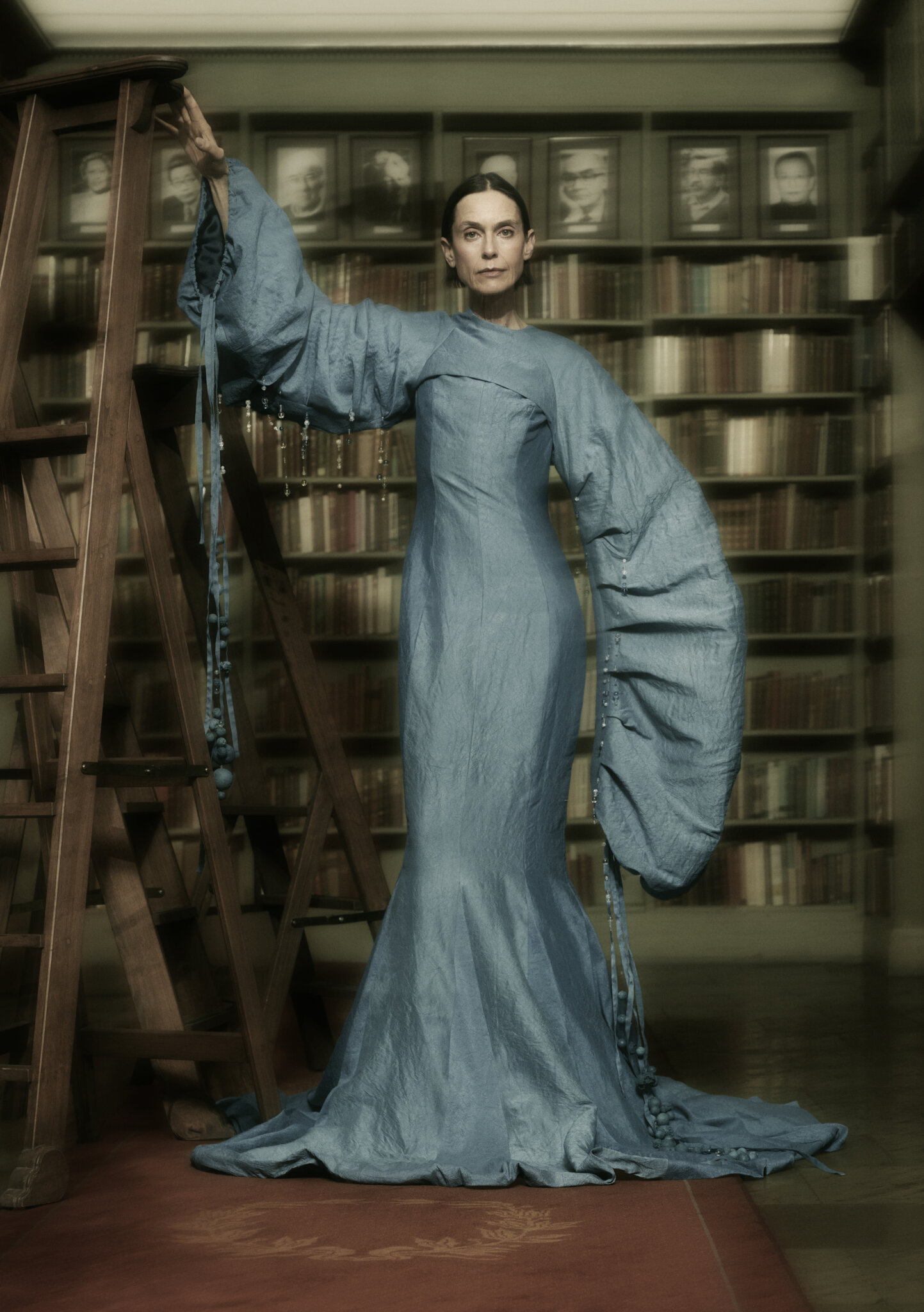
The 2025 Nobel Prize in Physics is awarded to John Clarke, Michel H. Devoret and John M. Martinis “for the discovery of macroscopic quantum mechanical tunnelling and energy quantisation in an electric circuit”
This year’s physics prize has been interpreted by Linnea Bergsten and Tobias Börjesson. They describe their work as follows:
“The creation embodies atoms randomly graded within a cloud of probability. We worked with rounded volumes in varying scales, from micro to macro. The garment has its own shape, independent of the body, evoking a sense of confinement. The silhouette represents a closed formation, as if behind a barrier. Like quantum phenomena, cascades of beads break through via tunnelling.”
Chemistry: Metamorphosis
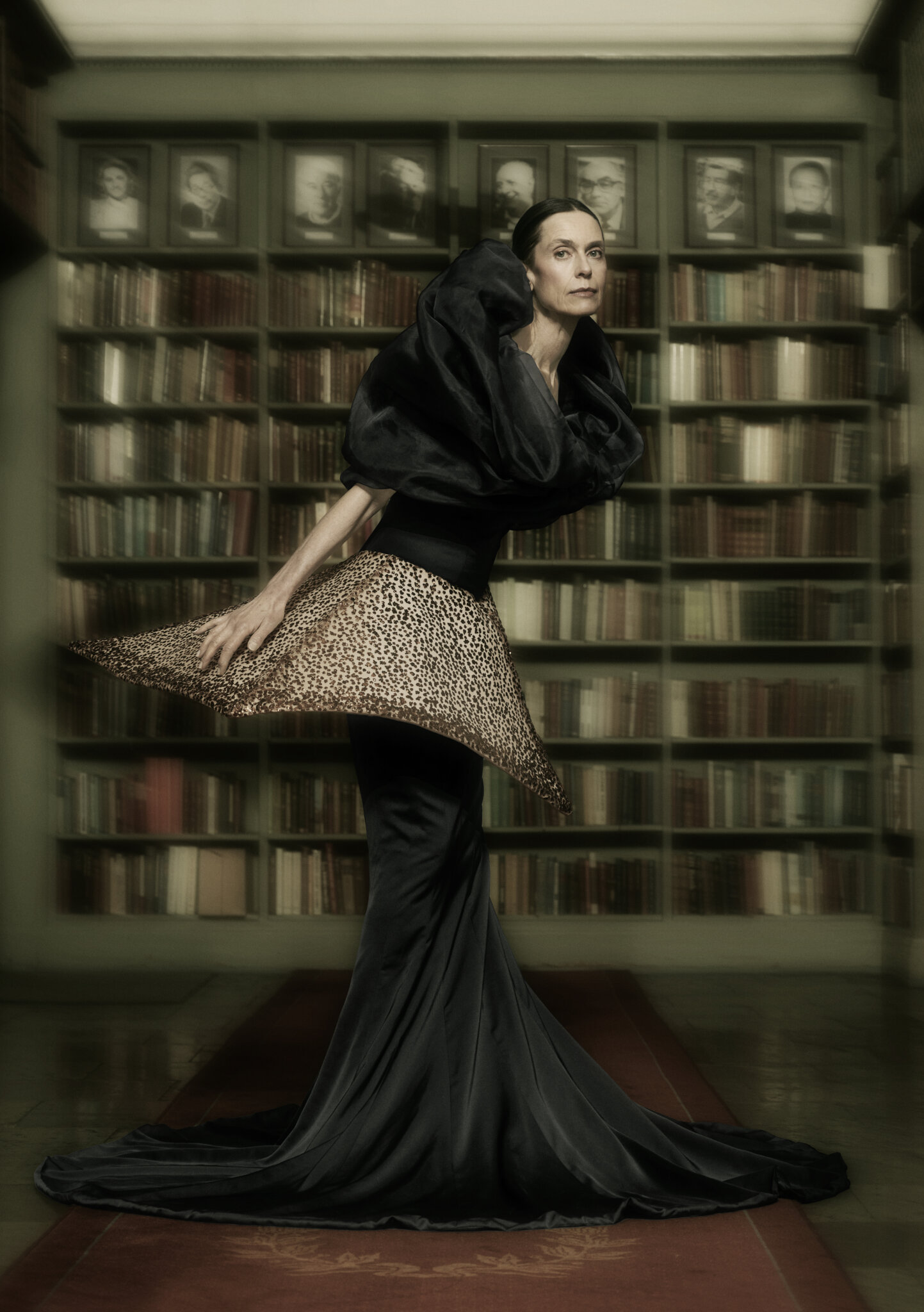
The Nobel Prize in Chemistry is awarded to Susumu Kitagawa, Richard Robson and Omar M. Yaghi “for the development of metal-organic frameworks”.
This year’s chemistry prize has been interpreted by Emma Castel, Julian Dahlberg and Sultan Mosawi. They describe their work as follows:
“The silhouette captures an ongoing transformation – a process where gas transitions into liquid through the vast cavities of a diamond structure. The result is a refined new form. Shimmering copper tones weave in the presence and energy of metal ions. A framework that captures the meeting of the sculptural and the organic. A physical and symbolic metamorphosis reminding us of the eternal cycle of change.”
Medicine: YoU
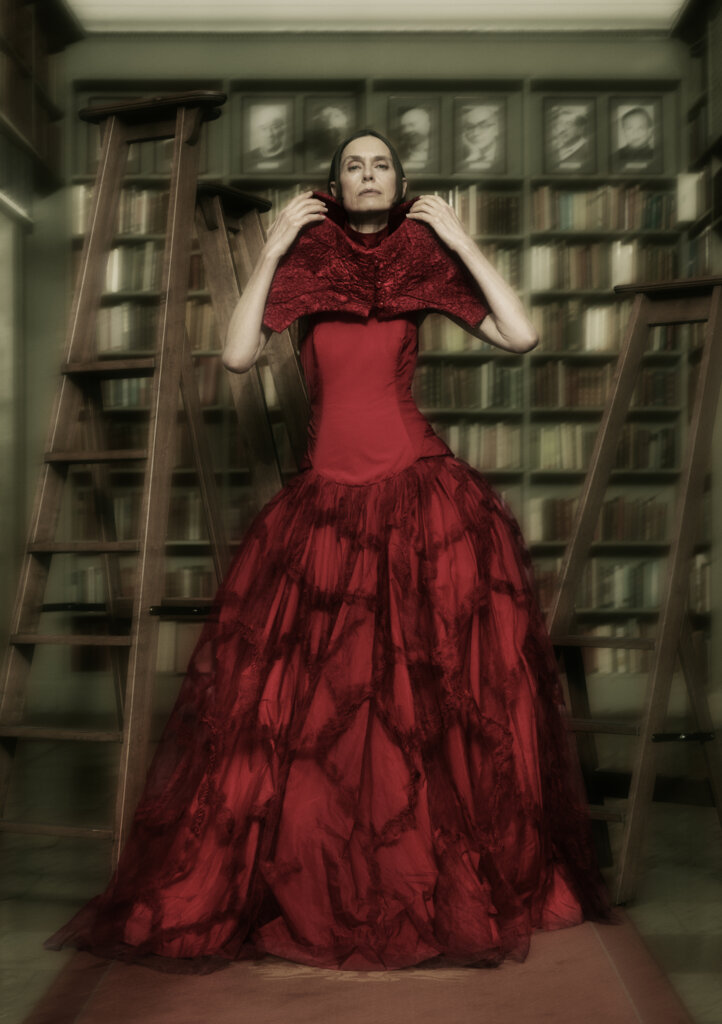
The Nobel Prize in Physiology or Medicine is awarded to Mary Brunkow, Shimon Sakaguchi and Fred Ramsdell “for their discoveries concerning peripheral immune tolerance”.
This year’s medicine prize has been interpreted by Odessa Calloway and Lovisa Schmidt. They describe their work as follows:
“Within the body’s inner landscape, life’s movements flow. In our design, science, emotion, structure and rhythm converge. At the heart of the piece burns a rising sun, together with the T-cell – the body’s guardian – as symbols of hope: a new chance and a story of a better life. The shifting surfaces embody a living, ever-changing function. Inner life emerges and becomes visible.”
Literature: Eclipse
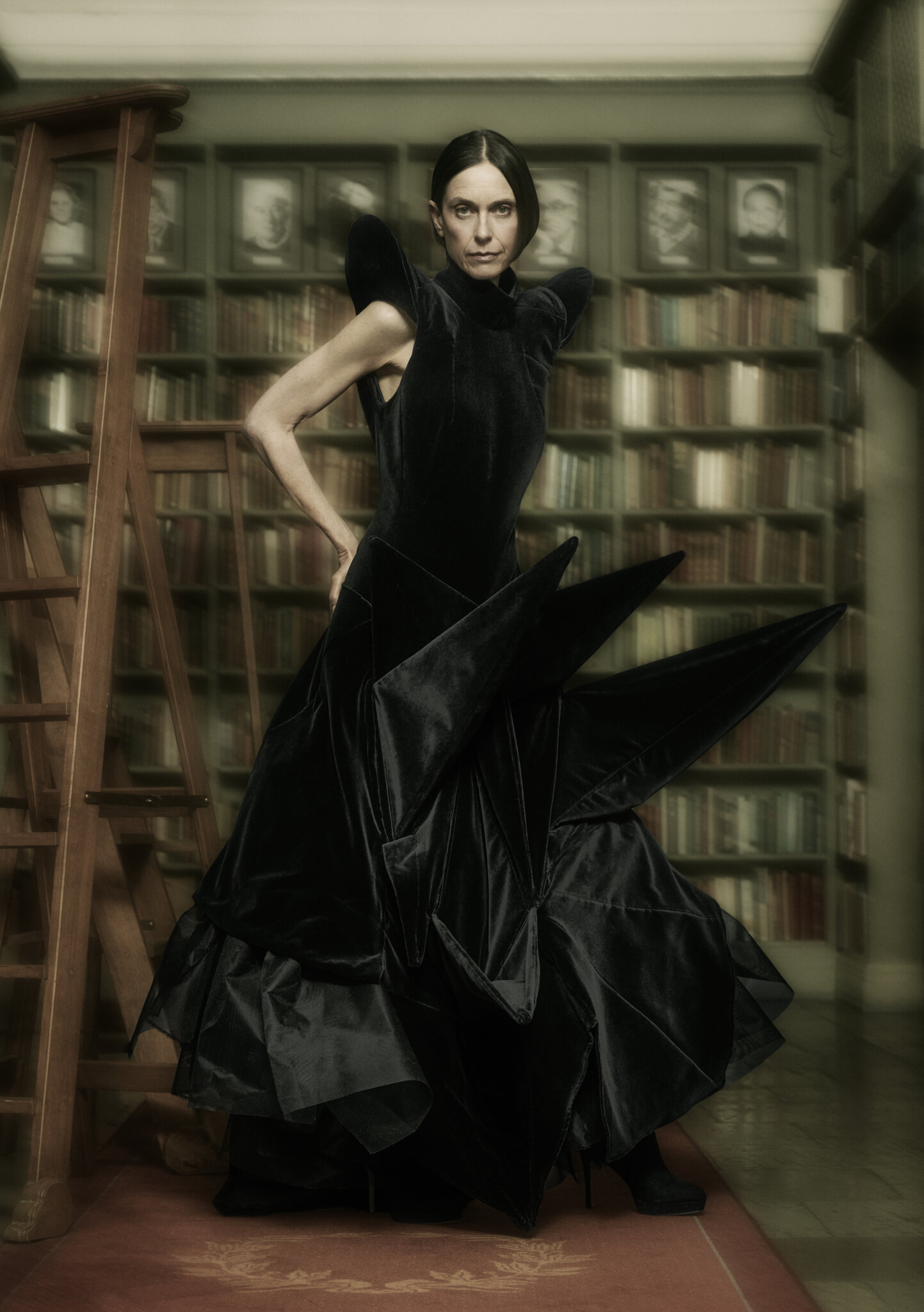
The Nobel Prize in Literature is awarded to Lázlo Krasznahorkai “for his compelling and visionary oeuvre that, in the midst of apocalyptic terror, reaffirms the power of art”
This year’s literature prize has been interpreted by Charlie Hoffmann and Mustafa Husseini. They describe their work as follows:
“A sculptural interpretation: a body poised between order and collapse, an origami-like form resembling a crystallised remnant of a lost civilisation, stillness within motion. Sharp points bear traces of time and resistance, fabric caught between fall and salvation; black velvet shapes the silhouette of human endurance in the poetic ruin where thought and matter meet – a garment that waits.”
Peace: Zenaida auriculata
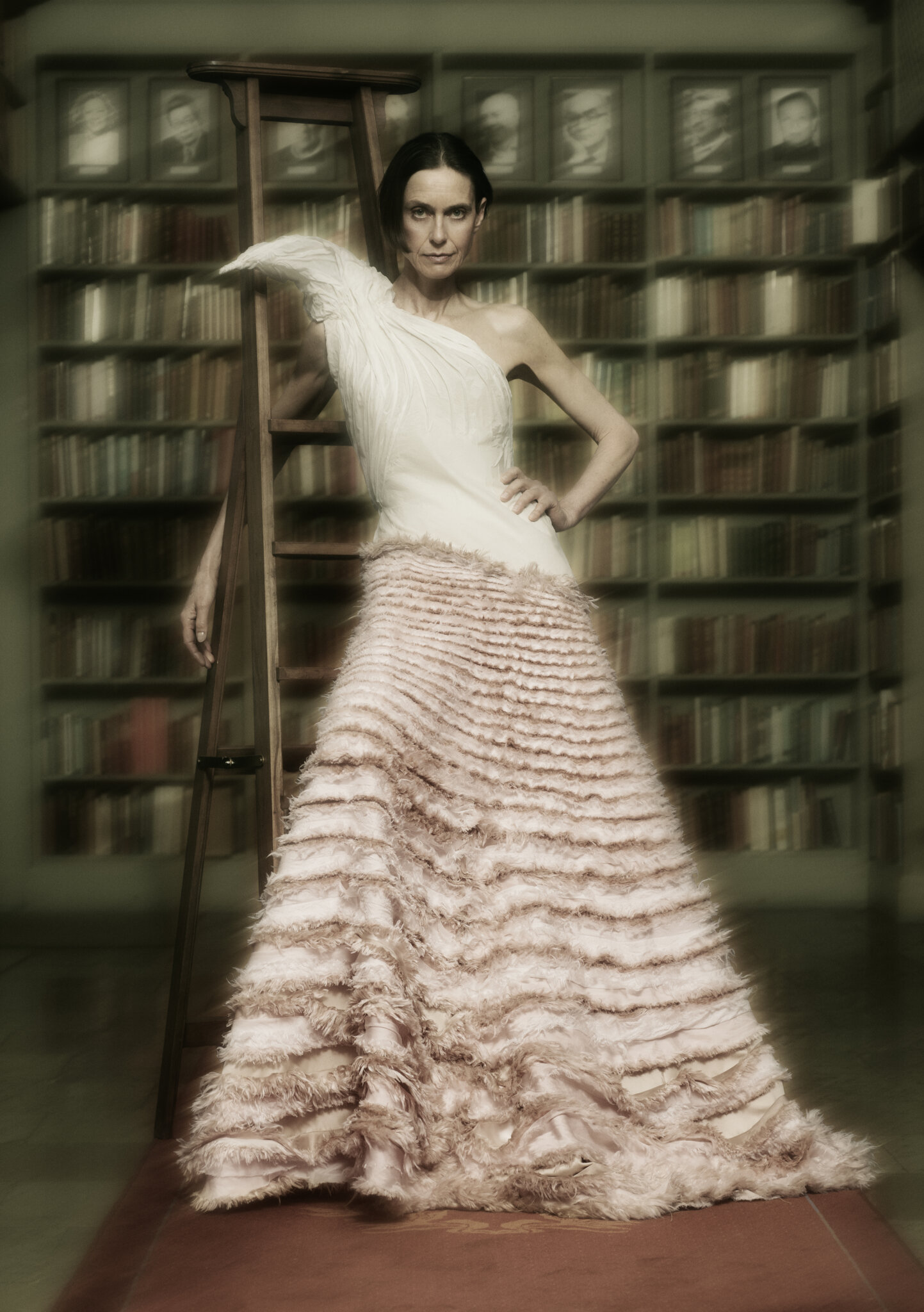
The 2025 Peace Prize is awarded to Venezuelan opposition politician Maria Corina Machado “for her tireless work promoting democratic rights for the people of Venezuela and for her struggle to achieve a just and peaceful transition from dictatorship to democracy”
This year’s peace prize has been interpreted by Zuzanna Mieczkowska and Johan Peralta. They describe their work as follows:
“This dress symbolises the transition from dictatorship to democracy. The lower part is marked by irregular cuts reflecting chaos, control and suppressed freedom. Gradually, the structure calms at the waist and transforms into a smooth, harmonious surface – a movement towards peace and balance. At the neckline, a drape culminates in the silhouette of the pink-eared dove (Zenaida auriculata), a symbol of hope and freedom. The dress tells the story of a journey from oppression to liberation, from darkness to light.”
Economics: Creative Destruction
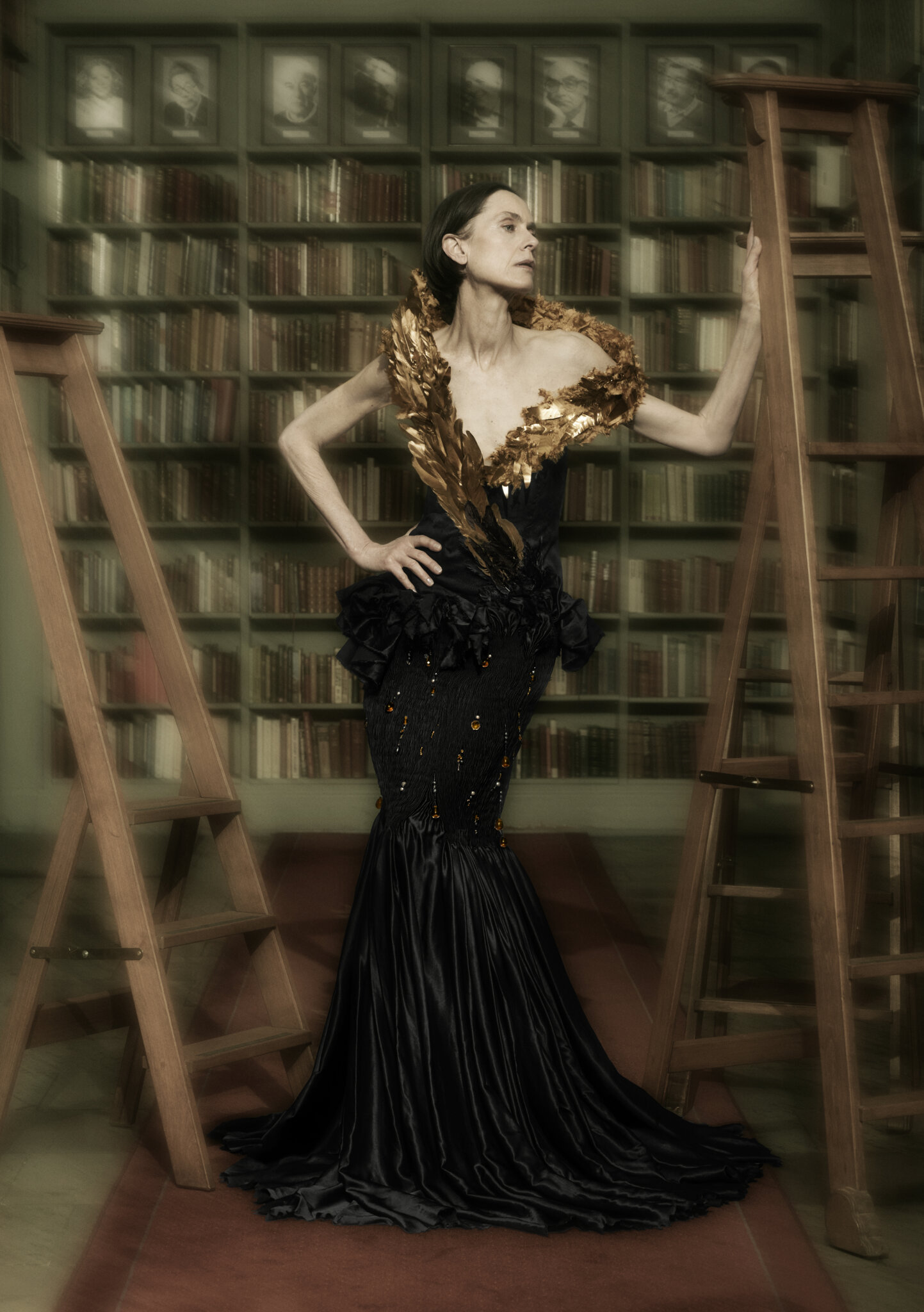
The 2025 Prize in Economic Sciences is awarded to Joel Mokyr, Philippe Aghion and Peter Howitt “for having explained innovation-driven economic growth”.
This year’s prize in economic sciences has been interpreted by Johanna Strand and Allada Wärdell. They describe their work as follows:
“From the ground, the skirt spreads like an aged system. The silhouette narrows into a smocked section, representing a phase where resources, ideas and energy gather and restructure. The upper part evolves into a phoenix with feather details, expressing rebirth. The whole embodies renewal as a gradual process: first breakdown, then concentration, and finally transformation in a new direction. The dress becomes a tangible interpretation of growth through change.”
Laureates visiting the Nobel Creations exhibition

Nobel Prize laureates at the Nobel Creations exhibition 2025 during the Get-Together.
© Nobel Prize Outreach. Photo: Nanaka Adachi

Nobel Prize laureates at the Nobel Creations exhibition 2025 during the Get-Together.
© Nobel Prize Outreach. Photo: Nanaka Adachi

Nobel Prize laureates at the Nobel Creations exhibition 2025 during the Get-Together.
© Nobel Prize Outreach. Photo: Nanaka Adachi

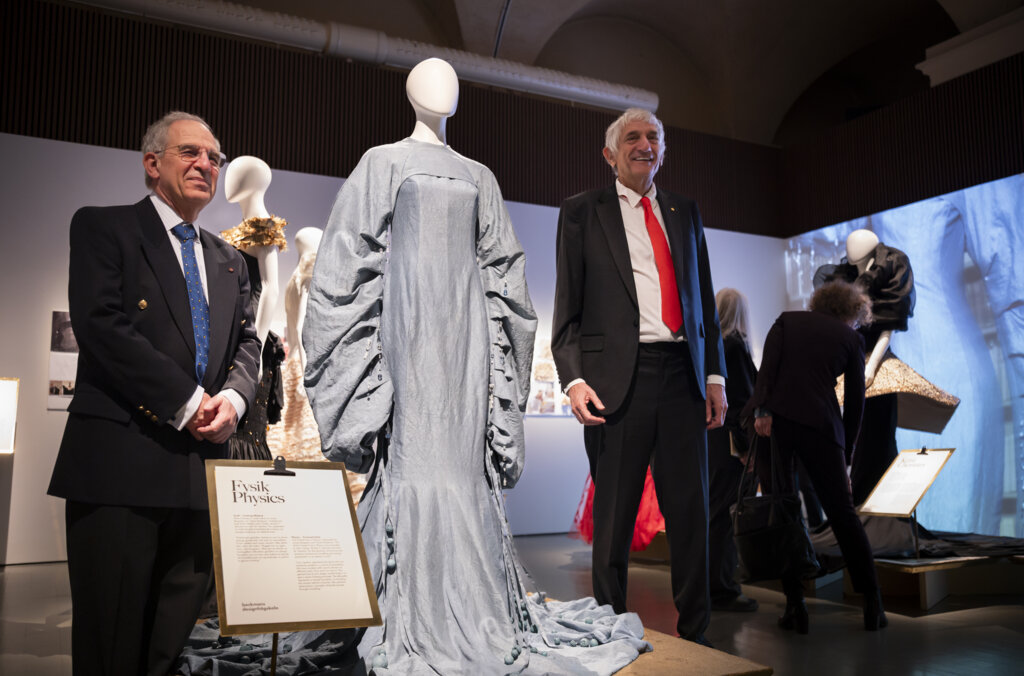
John M. Martinis and Michel H. Devoret with Nobel Creations dress.
© Nobel Prize Outreach. Photo: Nanaka Adachi
Before your visit
Bags and wardrobe
We advise you to not bring larger bags to the museum. In our cloakroom, there are a limited number of small lockers and lockable coat hangers. The cloakroom is unattended.
Photo policy
You are welcome to take photos and film at the museum, but please do not photograph or film the staff. We photograph, film and live-stream some of our events. The material can be used in the Nobel Prize Museum’s communication channels and marketing. If an event is arranged in collaboration with another actor, the material can be used in their communication.
Accessibility
On the museum’s accessibility site you can find information about our facilities, and available resources. Click on the link below to read more.
Past exhibitions
Take a look at some of the inspiring stories and ideas shared in our previous exhibitions.
Become a member,
experience more
Get free admission to the museum, and discounts in the shop and bistro. Enjoy priority access and discounts on concerts, previews, talks, and lectures.
Events
Friday nights at the museum
Explore our events, which span from concerts, literary talks, lectures, and performances to food and drink tastings.