The father of the Soviet hydrogen bomb, Andrei Sakharov (1921–1989), was awarded the Nobel Peace Prize in 1975 for his opposition to abuse of power and his work for human rights. The leaders of the Soviet Union reacted with fury and refused to grant Sakharov permission to travel to Oslo to receive the prize.
Sakharov was stripped of his Soviet honorary titles and was, in 1980, exiled to the city of Gorky together with his wife, Elena Bonner, where their lives were monitored in detail.
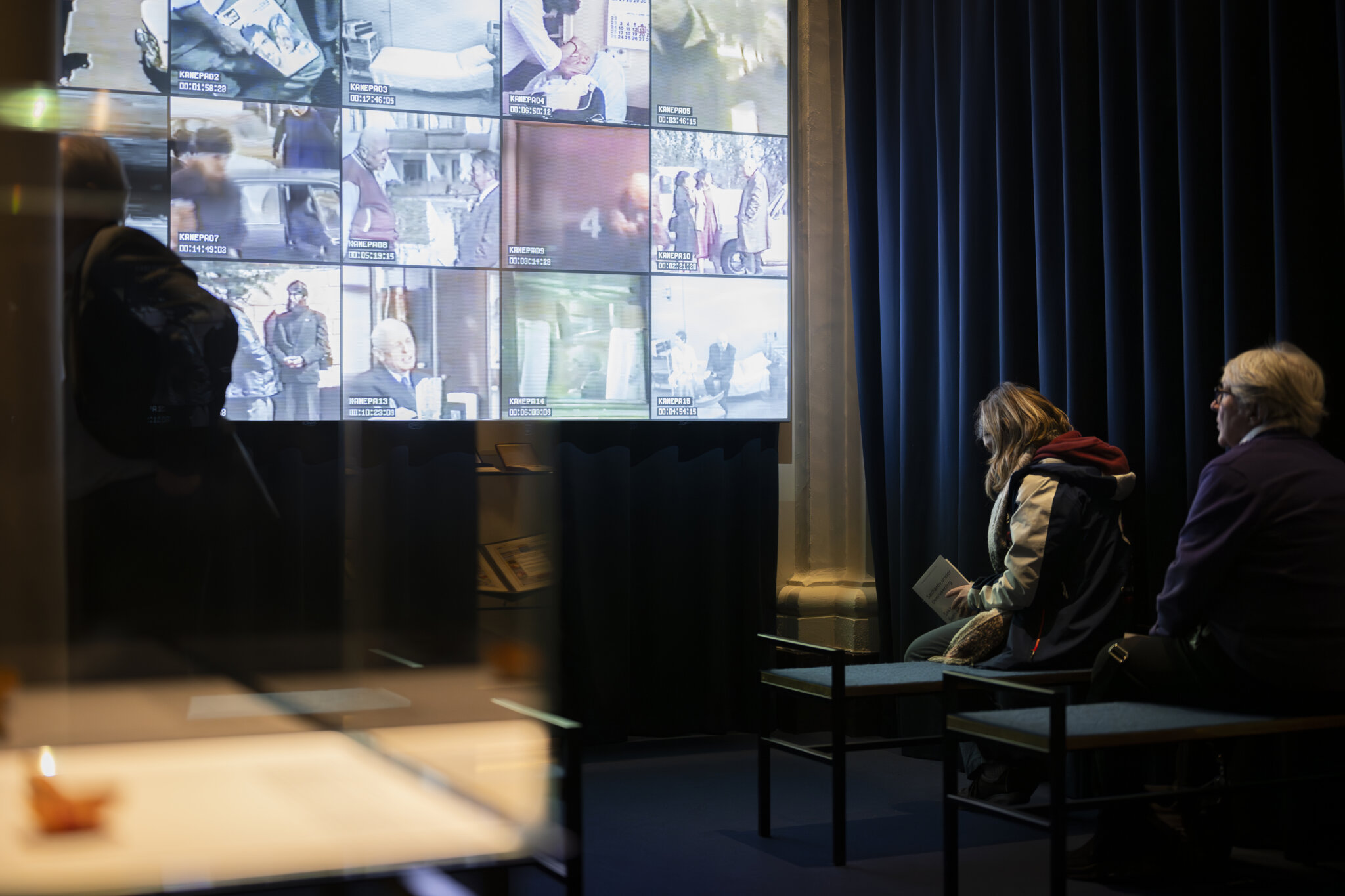
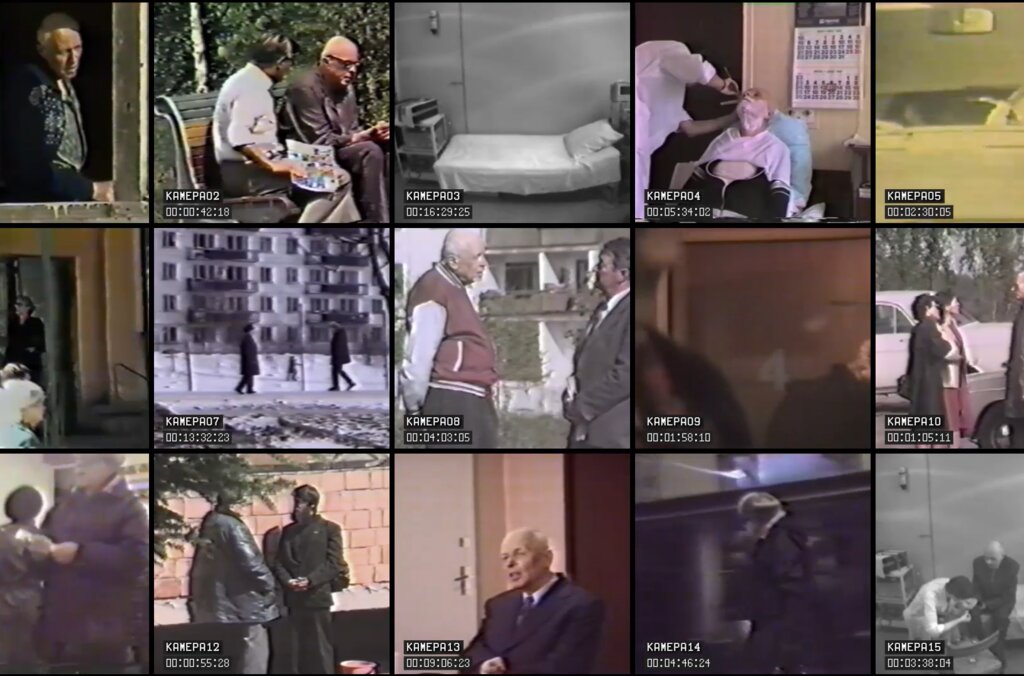
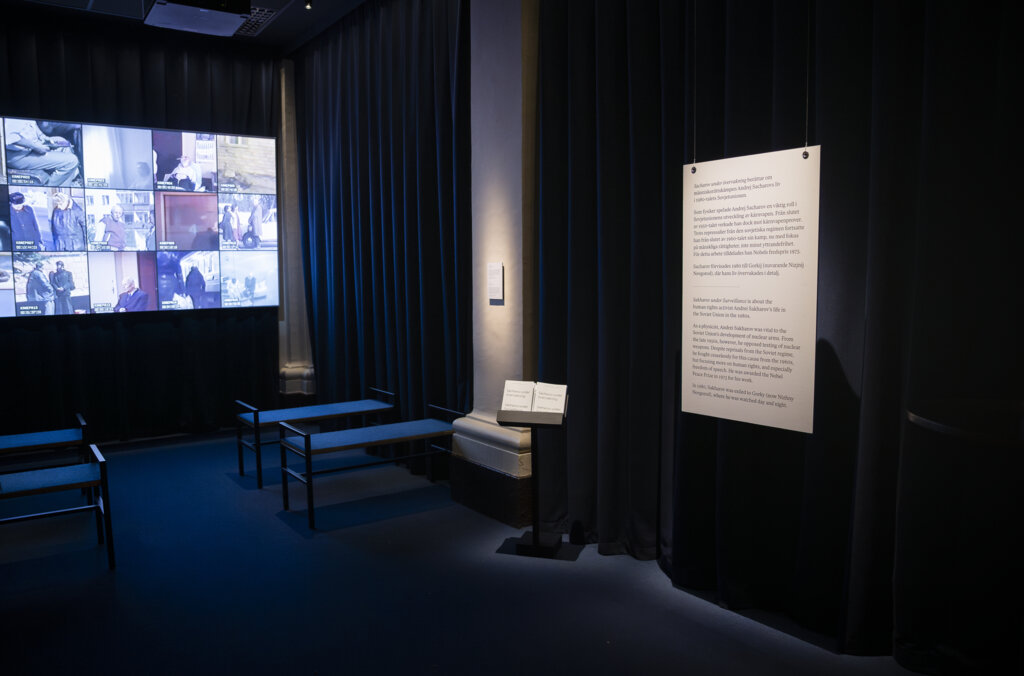
In the small exhibition Sakharov under surveillance, an installation is displayed consisting of preserved surveillance footage from Gorky during the years 1980–1986, when the Soviet security police KGB followed every step of Andrei Sakharov.
About the surveillance
In a text written for the exhibition, journalist Anna Narinskaya describes:
In Gorky, Sakharov and his wife Elena Bonner were placed in an apartment without a telephone. KGB officers were always on duty in the entrance hall. When no one was at home, the apartment was regularly searched. KGB cars followed Sakharov and his wife wherever they went.
But even this massive surveillance wasn’t enough. Sakharov was watched by lots of agents with hidden cameras who pretended to be ordinary passersby, shop assistants, and clinical staff. In addition, cameras were installed in many places that Sakharov visited regularly, such as the hospital.
During the years of Perestroika, when the KGB archives were briefly made available, the surviving portion of this video footage was handed over to Sakharov’s family. This is truly remarkable documentation, proving that the academician was considered an extremely dangerous opponent by the Soviet authorities. He and his family had to be kept under constant surveillance, as he was always expected to make unpredicted moves or offer resistance.
It can be said that Andrei Sakharov lived up to the authorities’ expectations. Despite his isolation, he managed to send texts to the West, and despite all attempts to break him, he kept up his resistance.
Who was Andrei Sakharov?
The nuclear physicist and Nobel Prize laureate Andrei Sakharov demonstrated his talent for theoretical physics early on and earned his doctorate in 1945. From 1948, under the leadership of Nobel Prize laureate Igor Tamm, he worked on the development of a Soviet hydrogen bomb.
Sakharov was a patriot and believed it was important to break the United States’ monopoly on nuclear weapons. However, from the late 1950s he began warning about the consequences of the arms race, and during the 1960s and 1970s he sharply criticized the Soviet system, which he argued deviated from fundamental human rights.
In 1980, Sakharov was exiled to Gorky, now Nizhny Novgorod, where his life was monitored in detail.
Anna Narinskaya
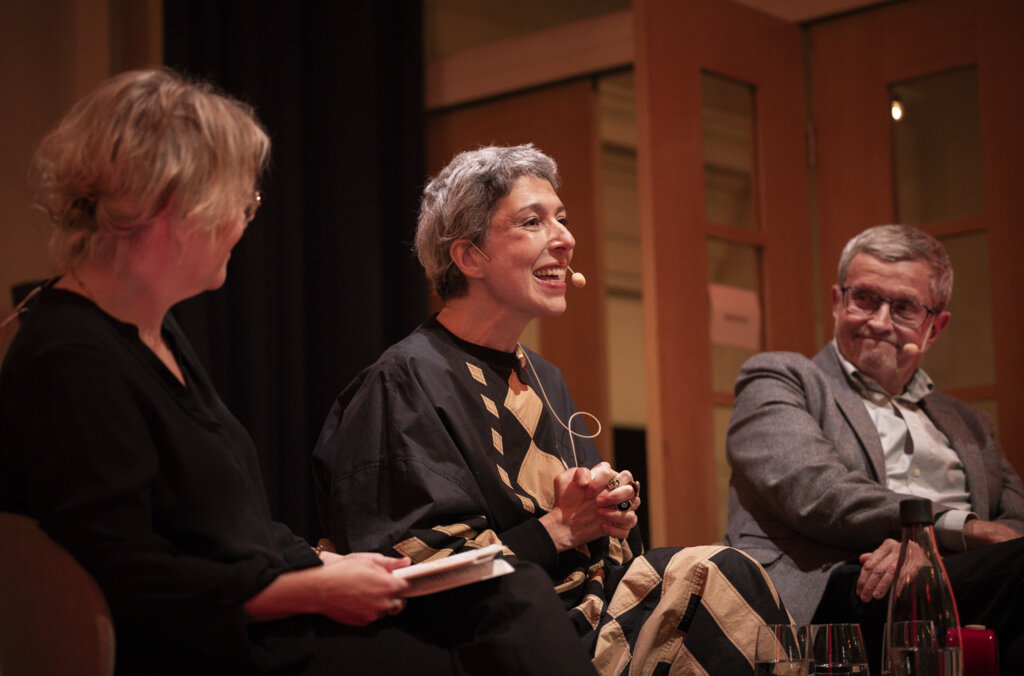
Anna Narinskaya is a Russian journalist, curator, documentary filmmaker, and playwright. Since 2022 she lives and works in Berlin, Germany.
Exhibition curation
Sakharov under surveillance is curated by the Nobel Prize Museum in collaboration with Anna Narinskaya.
Before your visit
Bags and wardrobe
We advise you to not bring larger bags to the museum. In our cloakroom, there are a limited number of small lockers and lockable coat hangers. The cloakroom is unattended.
Photo policy
You are welcome to take photos and film at the museum, but please do not photograph or film the staff. We photograph, film and live-stream some of our events. The material can be used in the Nobel Prize Museum’s communication channels and marketing. If an event is arranged in collaboration with another actor, the material can be used in their communication.
Accessibility
On the museum’s accessibility site ypu can find information about our facilities, and available resources. Click on the link below to read more.
Past exhibitions
Take a look at some of the inspiring stories and ideas shared in our previous exhibitions.
Become a member,
experience more
Get free admission to the museum, and discounts in the shop and bistro. Enjoy priority access and discounts on concerts, previews, talks, and lectures.

Events
Friday nights at the museum
Explore our events, which span from concerts, literary talks, lectures, and performances to food and drink tastings.