A 125-year-old dream
As early as 1901, when the first Nobel Prize was awarded, the idea of a permanent home for the Nobel Prize was born.
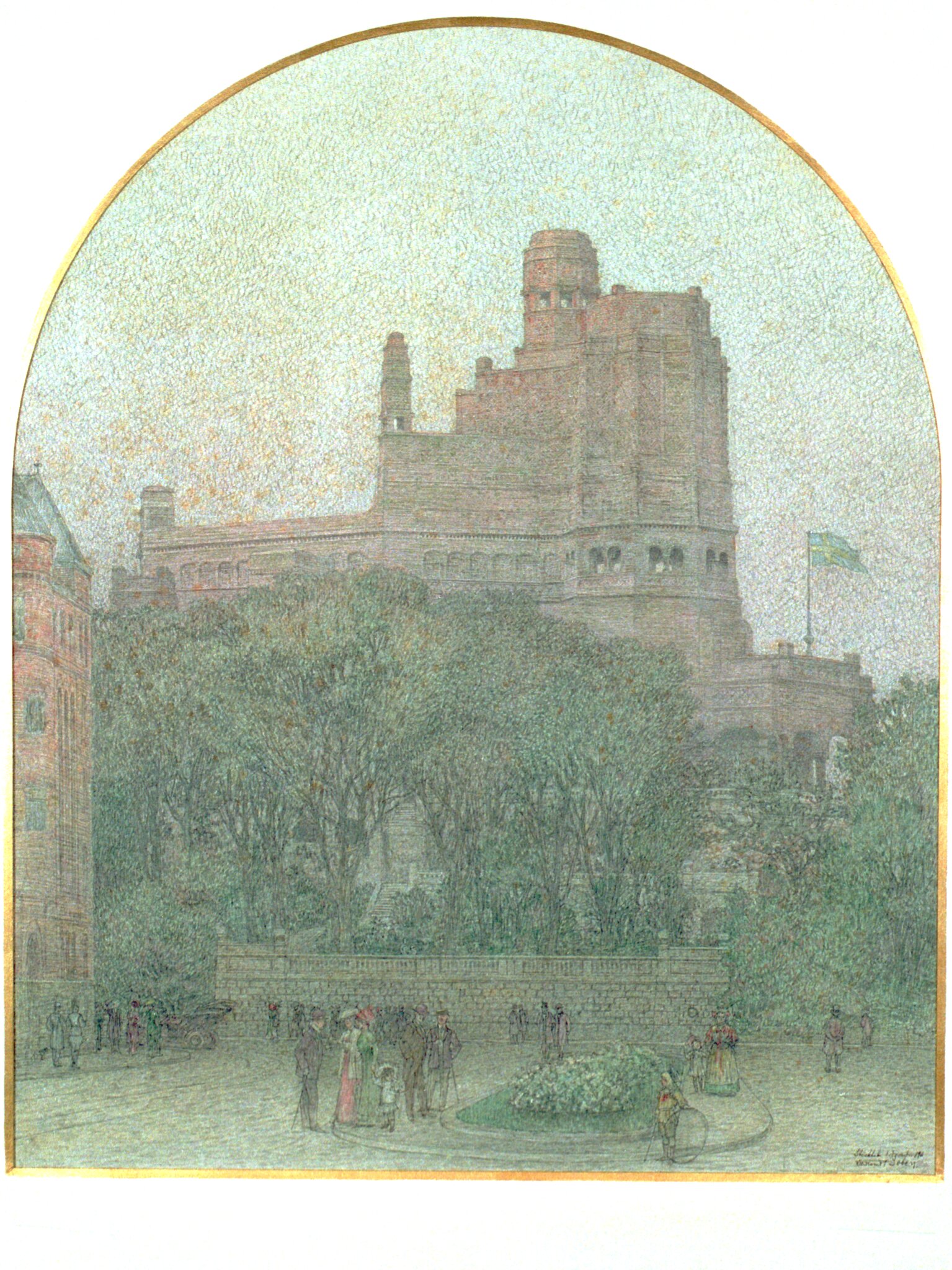
At the beginning of the 20th century, the Nobel Foundation purchased a plot of land by Djurgårdsbron at the end of Strandvägen, what is now known as Nobel Park. Architect Ferdinand Boberg was commissioned to design a building that would house the Foundation’s operations as well as a ceremonial hall for the annual Nobel Prize award ceremony.
Boberg was one of the leading architects of his time. His works include Rosenbad, Prins Eugens Waldemarsudde, the NK department store, and the gas holders in Hjorthagen.
Boberg designed the Nobel Palace between 1906 and 1911, but the building was never realised.
His proposal was made public in 1911, but the plans were put on hold with the outbreak of the First World War.
Office and a museum
After the war, financing a large building was considered too risky during a period of economic uncertainty. Stockholm was also about to gain a new concert hall—Konserthuset, designed by Ivar Tengbom—where the Nobel Prize award ceremony could be held, while the Nobel Prize banquet would take place in the new City Hall, designed by Ragnar Östberg.
Instead, the Nobel Foundation built a smaller office building at 14 Sturegatan. Designed by architect Ragnar Hjorth, it was completed in 1926.
It was not until 2001 that a museum dedicated to the Nobel Prize opened, housed in the Stock Exchange Building in Stockholm’s Old Town. The location was intended as a temporary home pending a larger museum, yet today the Nobel Prize Museum has been based in the Börshuset for more than 25 years.
A site with Nobel history
The Nobel Center is scheduled to open in 2031. The new building will be located along the emerging cultural axis at Slussen – a site with deep Nobel connections. It was here, in the late 1820s, that Alfred Nobel’s father, Immanuel Nobel, reinforced the quay. Through innovative engineering solutions, he provided an existing building with a new foundation.
The new Nobel Center will be a place where people from around the world can explore exhibitions, attend lectures, engage in dialogue, and experience cultural events, open to everyone, all year round. The award ceremony and banquet will continue to be held at Konserthuset and Stockholm City Hall.
We didn’t start yesterday…
MORE ABOUT NOBEL CENTER
-
Nobel Center
The Nobel Center will be a public building for science, literature and peace at Slussen in Stockholm.

View from the water along the quay.
© Onirism/Nobel Prize Outreach
-
The content
A home is now being built for Alfred Nobel’s unique legacy, where his handwritten will is to be exhibited permanently for the first time.

ARTECHOUSE, Time, Life, and Eternity, 2022.
© Nobel Prize Outreach. Photo: Jean-Baptiste Béranger
-
The house
Nobel Center offers a new landmark on the waterfront in the Swedish capital – an international symbol of knowledge, science, literature and peace.

Panoramic view from the north.
© Onirism/Nobel Prize Outreach


