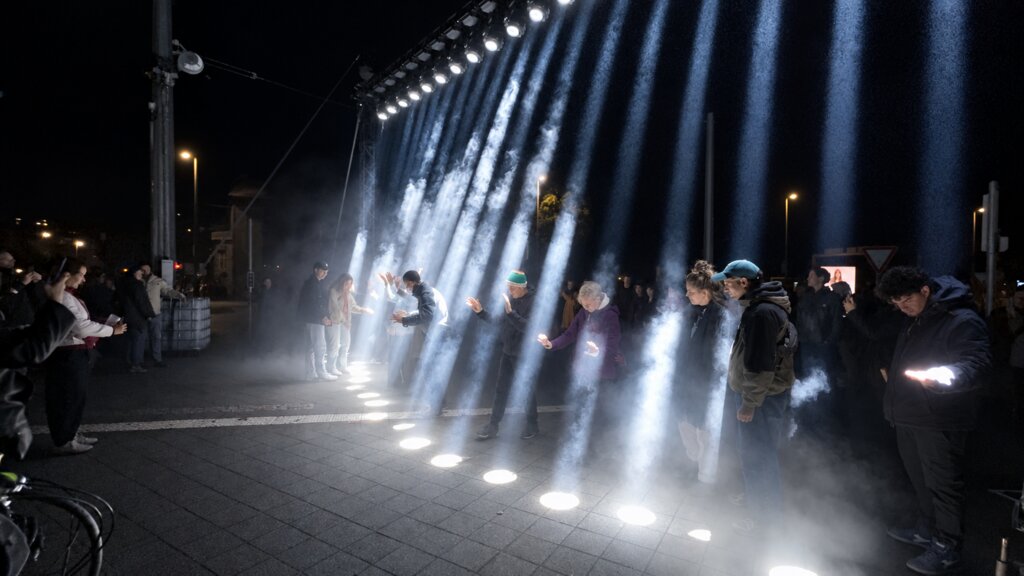
A barrier of light invites visitors to embody the power of people coming together to overcome obstacles. The bright vertical beams of light are evocative of a blockade separating or dividing the audience. When an individual approaches, they can influence one of the beams and set it in motion. However, it is only when multiple people collaborate across the entire curtain of light that the barrier can be broken.
Politician Lech Wałęsa was awarded the Nobel Peace Prize in 1983 for his non-violent struggle for free trade unions and human rights in Poland. It was work like Wałęsa’s that made peaceful protest possible, allowing people to come together in support of freedom, democracy and human rights. Barriere was originally commissioned for Leipzig to commemorate the Peaceful Revolution of 9 October 1989, when 70,000 people behind the Iron Curtain demonstrated peacefully for freedom and democracy.
In the spirit of Wałęsa’s work and the Peaceful Revolution, Barriere shows how individual actions can grow into a collective force. When people come together and act collectively, barriers can be broken and the way forward can be opened.
Nobel Prize Facts
Politician Lech Wałęsa was awarded the Nobel Peace Prize in 1983 for“for non-violent struggle for free trade unions and human rights in Poland”.

NOBEL WEEK LIGHTS
5–13 December 2026 | 16:00–22:00
Stockholm City and Tensta
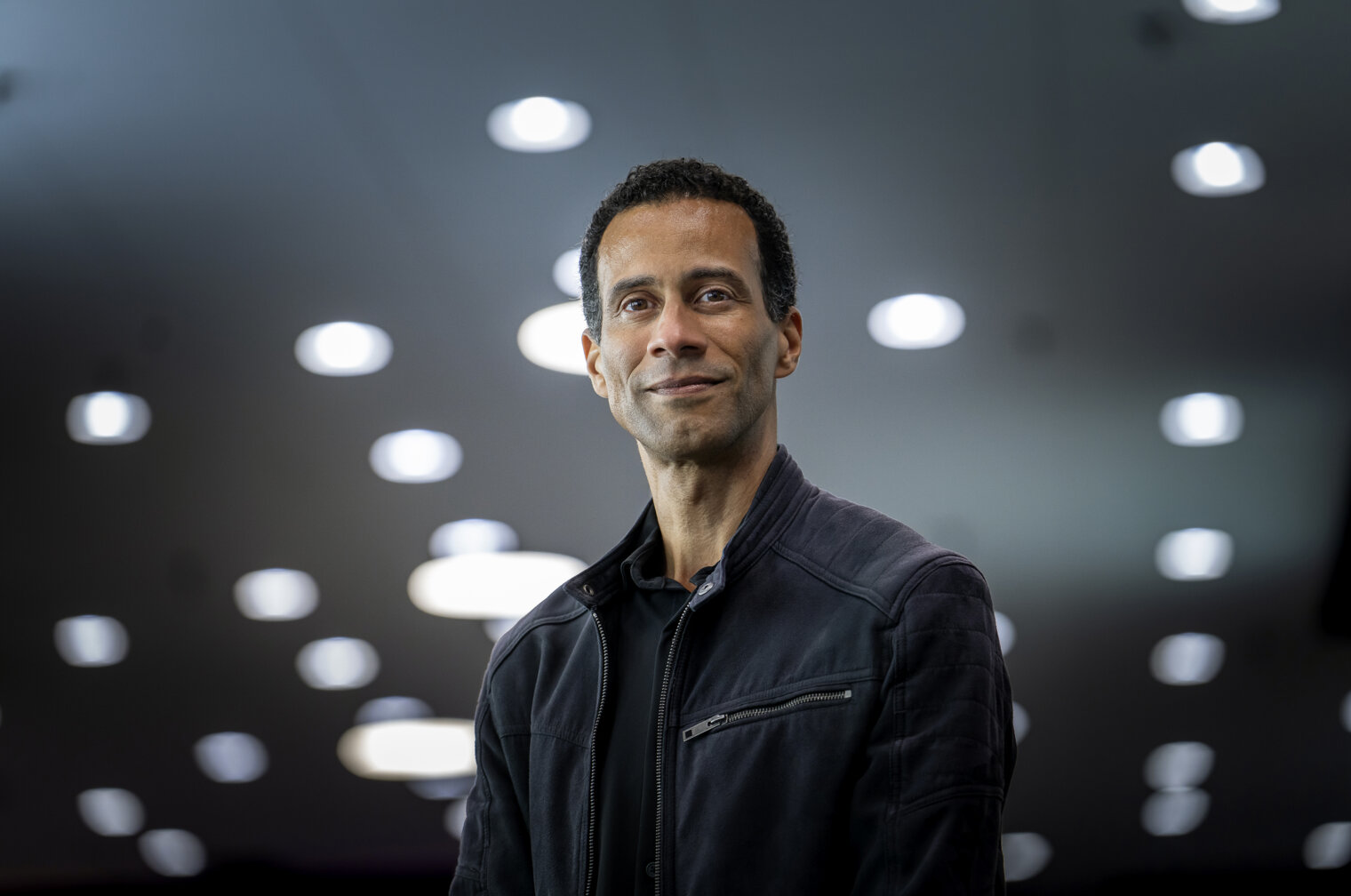
Philip Ross
Philip Ross is a light designer, artist and researcher whose work is inspired by the intersection of art, design and science. His works are always open: co-shaped by people and the environment. Ross exhibits internationally at light festivals, writes about light and is a regularly invited speaker.
Since 2026, he is also exploring the versatile potential of light art as director of the GLOW Light Festival in Eindhoven.
NOBEL WEEK LIGHTS
A light art festival inspired by the Nobel Prize
5–13 December 2026 | Free admission