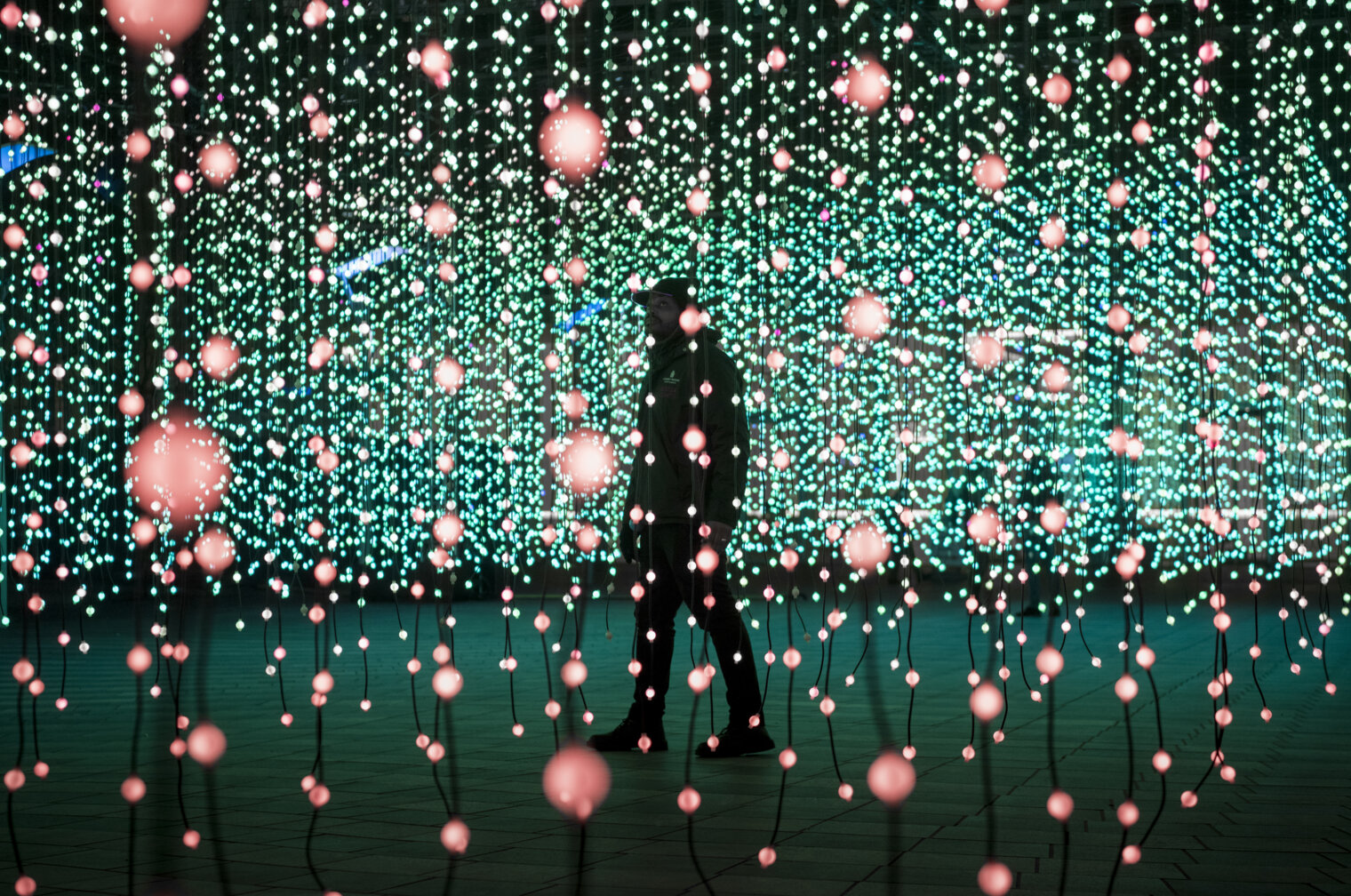
Submergence invites visitors to step into a sea of light. Blues and greens evoke the natural glow of ocean organisms, and ever-shifting patterns of light mimic submarine living systems in motion.
In the ocean, jellyfish, squid, fish and microscopic organisms produce bioluminescence, a visible glow generated by living creatures themselves, most often in blue and green. One of these creatures would go on to transform modern science. The jellyfish Aequorea victoria produces blue light through a protein called aequorin, which transfers energy to Green Fluorescent Protein (GFP), causing it to glow brilliant green.
In 2008, the Nobel Prize in Chemistry was awarded to Osamu Shimomura, Martin Chalfie och Roger Y. Tsien for the discovery and development of GFP. By harnessing this glowing protein, scientists gained the ability to illuminate processes inside living organisms that had previously remained invisible. GFP can, for example, be used to track the growth of cancer tumours, reveal the development of Alzheimer’s disease in the brain, or show how bacteria spread.
Submergence creates a poetic connection to this discovery: how a tiny source of light found within a jellyfish became a tool for illuminating the invisible world within life itself.
Nobel Prize Facts
The Nobel Prize in Chemistry 2008 was awarded to Osamu Shimomura, Martin Chalfie och Roger Y. Tsien “for the discovery and development of the green fluorescent protein, GFP”.

NOBEL WEEK LIGHTS
5–13 December 2026 | 16:00–22:00
Stockholm City and Tensta

Squidsoup
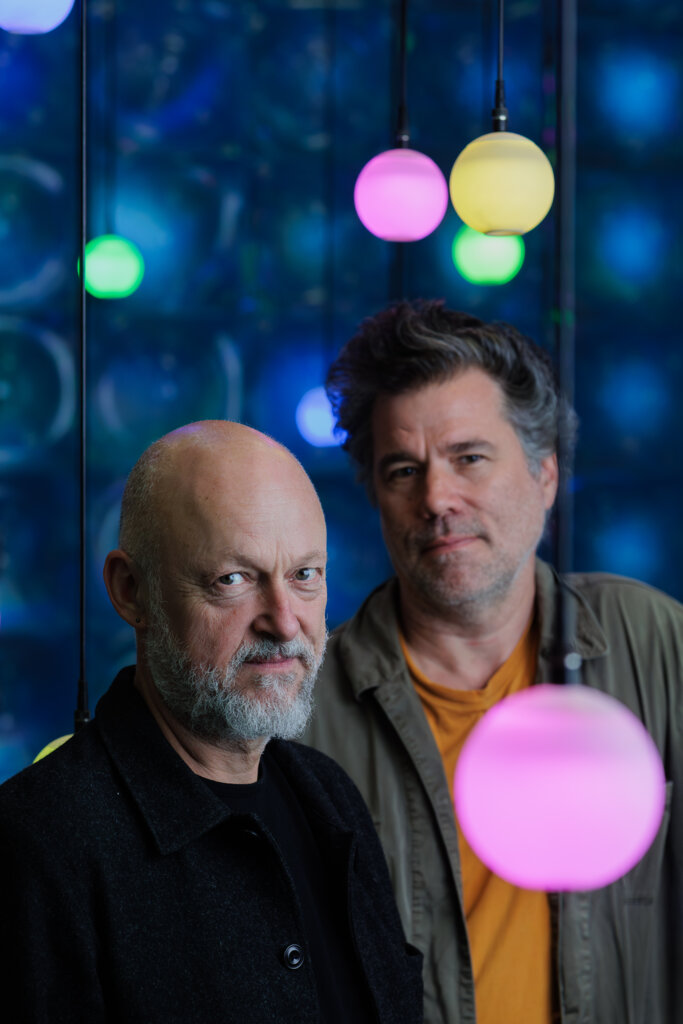
Squidsoup is an international group of artists, researchers, technologists and designers working with digital and interactive media experiences.
Their work combines physical and digital spaces with intuitive forms of interaction to create immersive and responsive environments. Squidsoup has exhibited across the globe at a broad range of events and locations.
NOBEL WEEK LIGHTS
A light art festival inspired by the Nobel Prize
5–13 December 2026 | Free admission